

 Home
Home Reader










 Software
 Windows
 Chameleon Ultra GUI
 iOS
iOS Android
 Web
Web Tutorial
 Apps
Apps Tips
Tips Documents
 Instructions
 Chameleon Ultra
 UHF Reader to change TID
News
Flipper One — We Need Your Help: Inside the Most Ambitious Open Linux Cyberdeck Ever Built

May
We’re finally ready to talk about Flipper One — a project we’ve been grinding on for years and have rebuilt from scratch several times. It’s an incredibly hard project, both financially and technically. So today we’re going public not with a big shiny announcement, but to tell the whole story straight. Honestly? We’re genuinely terrified, and we need your help.
TL;DR: With Flipper One, we’re reimagining what a Linux cyberdeck can be — it’s a huge project. We’re opening up the development process and asking the community for help.
With Flipper One, we’ve set ourselves a list of ambitious goals:
- Build the most open and best-documented ARM computer in the world, with full mainline Linux kernel support.
- Push vendors to open up their existing closed-source code and ditch binary blobs entirely.
- Build an unconventional hardware platform based on a co-processor architecture that pairs a microcontroller with a CPU, and port tons of low-level MCU code.
- Rethink how people use Linux and develop our own GUI framework with wrappers around existing CLI utilities.
Many of these goals come with a lot of uncertainty, which is scary. But we believe this is the only way to make a truly meaningful contribution to the open-source community and to education.
What is Flipper One?
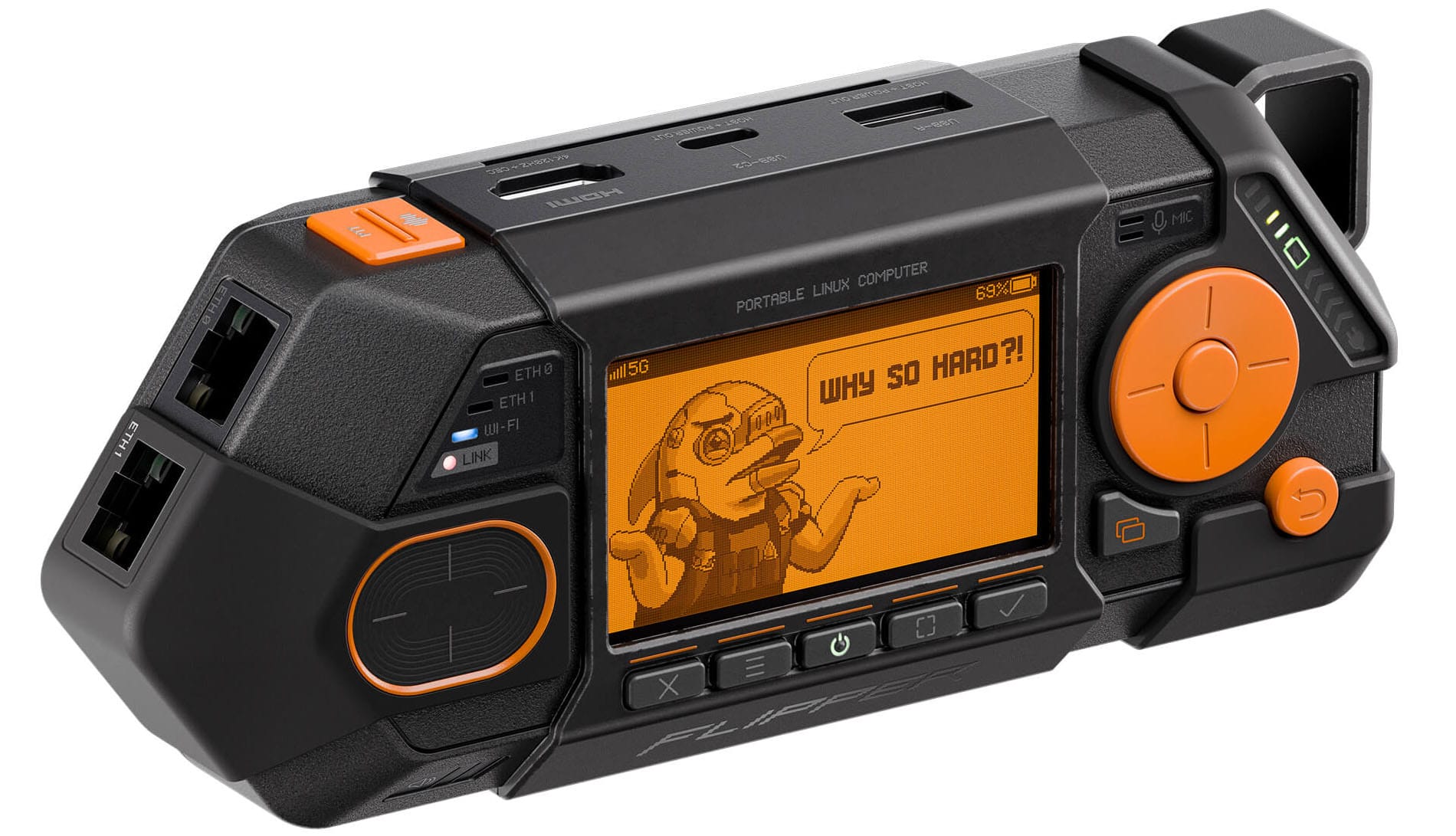
Flipper One isn’t an upgrade to Flipper Zero — it’s a completely different project with its own goals. Flipper One is an open Linux platform you can build almost anything on: from a 5G-enabled IP network analyzer to an SDR-powered radio signal analyzer with local AI. We focused a lot on the hardware expansion system. You can connect high-speed modules to Flipper One over PCI Express, USB 3.0, and SATA interfaces. Add an SDR, a fast SSD, or a cellular modem — just plug in the right module.
Flipper One comes with several network interfaces: 2× Gigabit Ethernet, USB Ethernet (5 Gbps), and Wi-Fi 6E (2.4/5/6 GHz). You can add 5G connectivity by plugging in an M.2 modem. That means you can use Flipper One as a router, a VPN gateway, or a bridge between wired and wireless networks.
Zero vs One
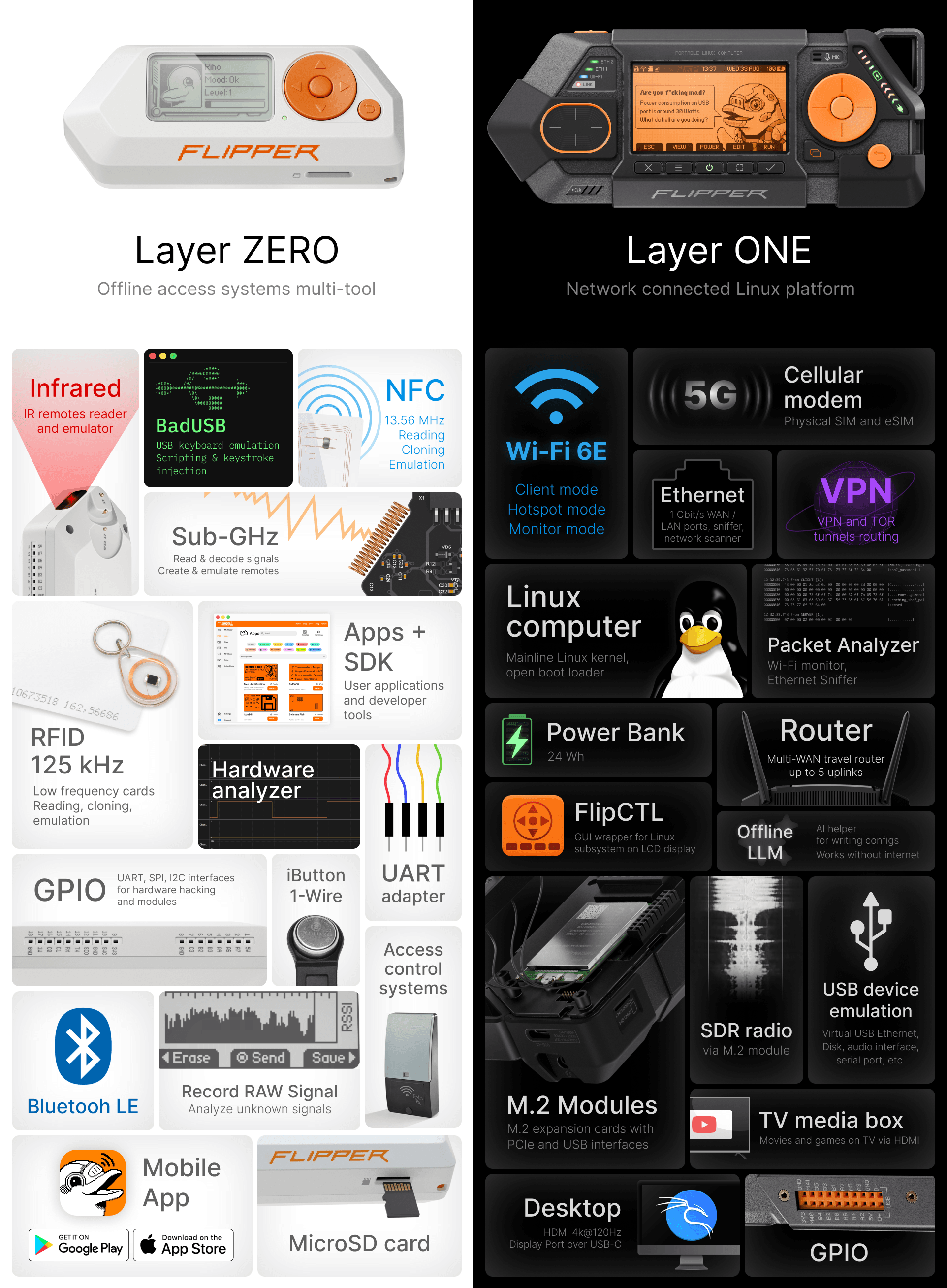
Flipper Zero and Flipper One are completely different projects built for different tasks. The easiest way to think about it is in terms of networking layers:
- Layer 0 (Flipper Zero) — Offline point-to-point access-control protocols: NFC, low-frequency RFID, Sub-1 GHz radio, Infrared, wired protocols like iButton, UART, SPI, I²C. Based on a low-power microcontroller.
- Layer 1 (Flipper One) — Everything that’s IP-connected: Wi-Fi, Ethernet, 5G, and satellite. It’s all about networking, data transfer, and high-performance computing. Running on powerful hardware and an open Linux toolkit — enough computing power to handle SDR and local AI.
They’re not “newer” and “older” generations of the same product. Flipper One doesn’t replace Flipper Zero — they’re entirely different categories of devices.
Truly Open Linux Platform
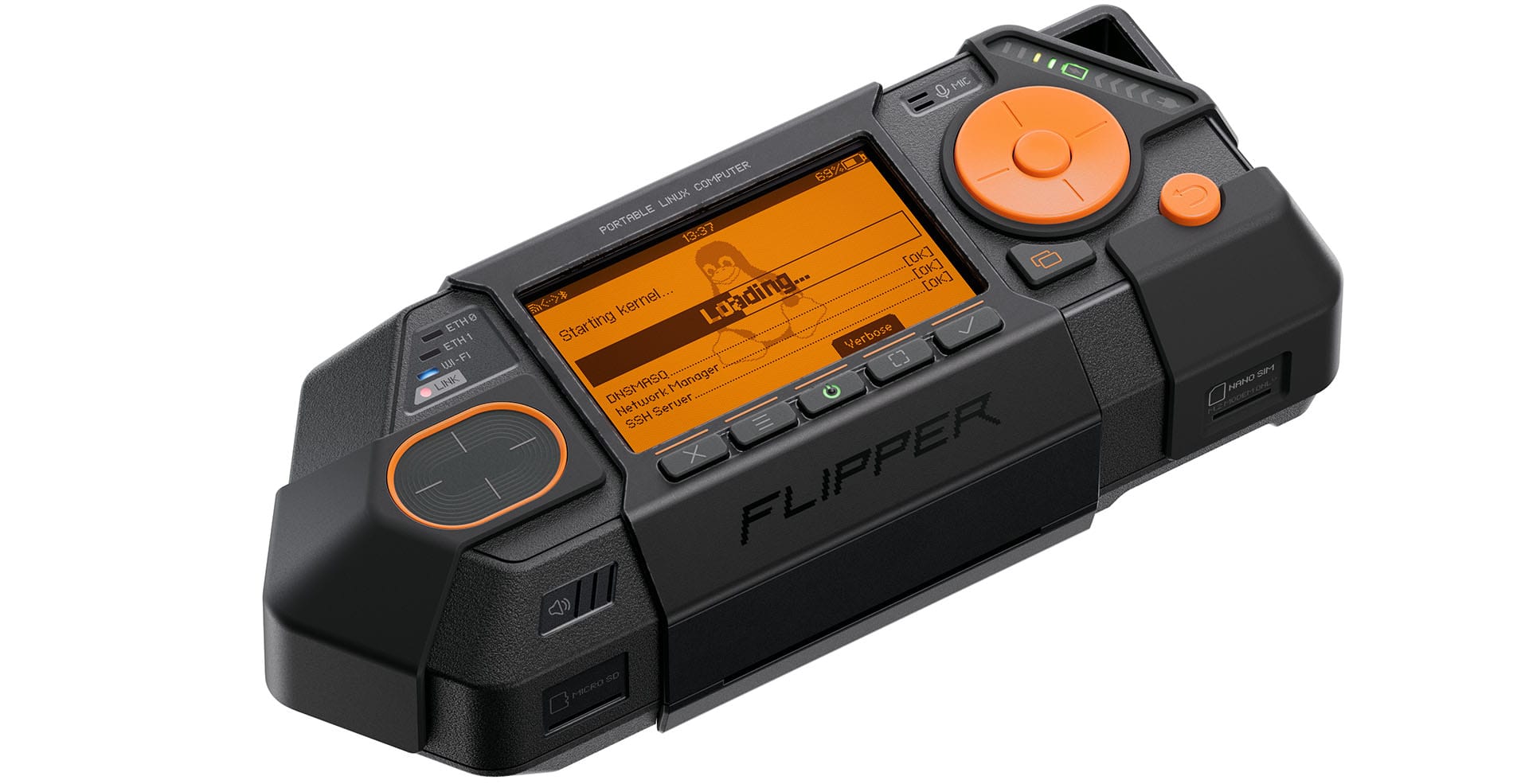
We want to build a truly open Linux hardware platform — the best-documented ARM computer, one that works out of the box on any recent upstream kernel. Our goals:
- Full mainline Linux kernel support
- No binary blobs, closed drivers, or proprietary firmware
- No vendor-locked BSP (board support package)
We say “truly open” because the current state of ARM Linux is depressing. Every vendor bolts on their own custom mess: closed boot blobs, vendor-specific patches, “board support packages” that nobody outside the chip maker can really understand. You can no longer just read the specs and understand how computers work — you can only learn the workarounds for one specific chip with one specific BSP.
To pull this off, we’ve partnered with Collabora to push full support for the Rockchip RK3576 SoC into the mainline Linux kernel. This means you can download the kernel directly from kernel.org, with zero vendor patches, and run it on your Flipper One.
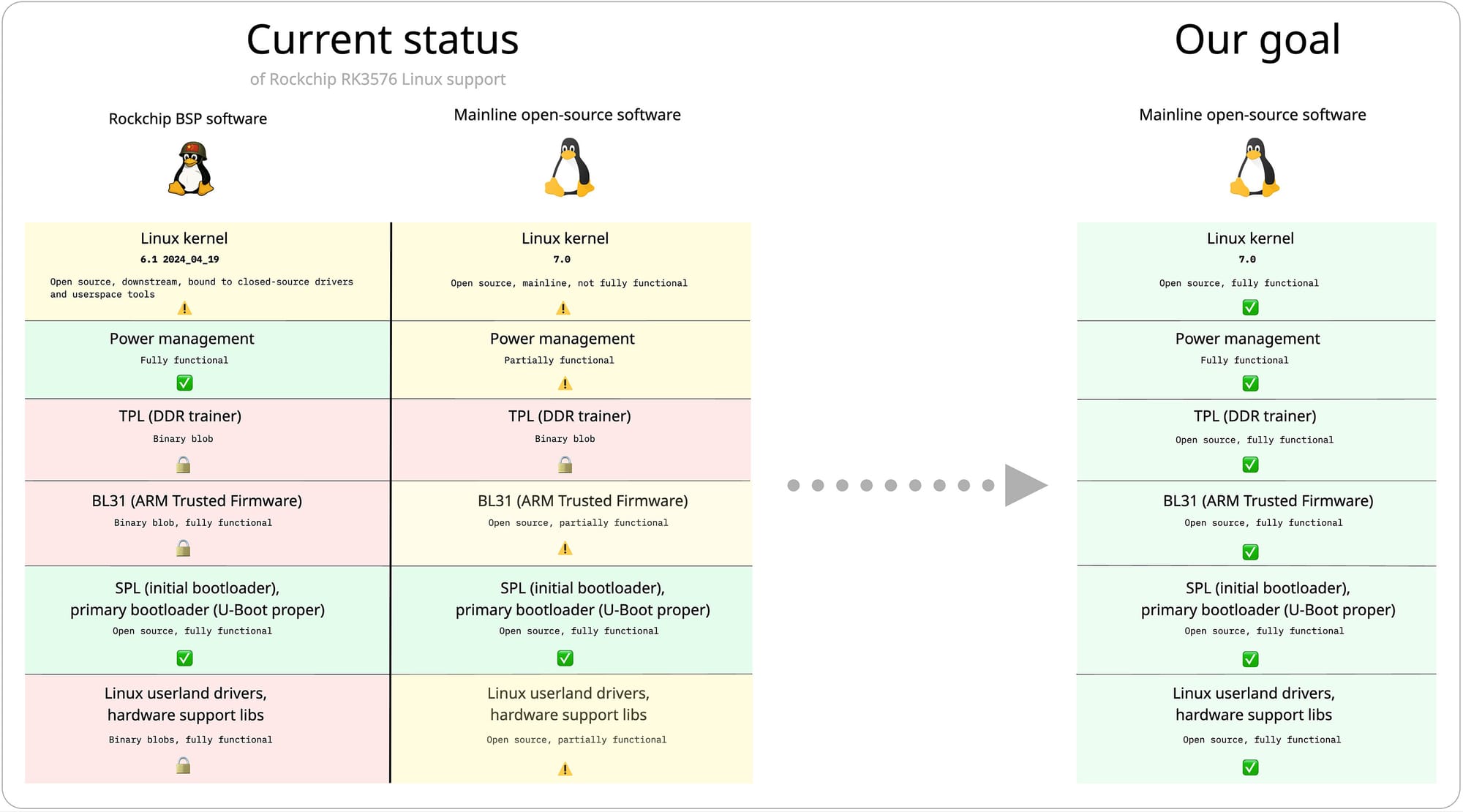
Current RK3576 mainline support is in pretty good shape, and all major components are working. But there’s still one last binary blob in the boot chain — the DDR trainer. The community is invited to help polish RK3576 support, close driver gaps (NPU, hardware video decoding), and even convince Rockchip to open that last blob.
Developer Portal — Let’s Build Together
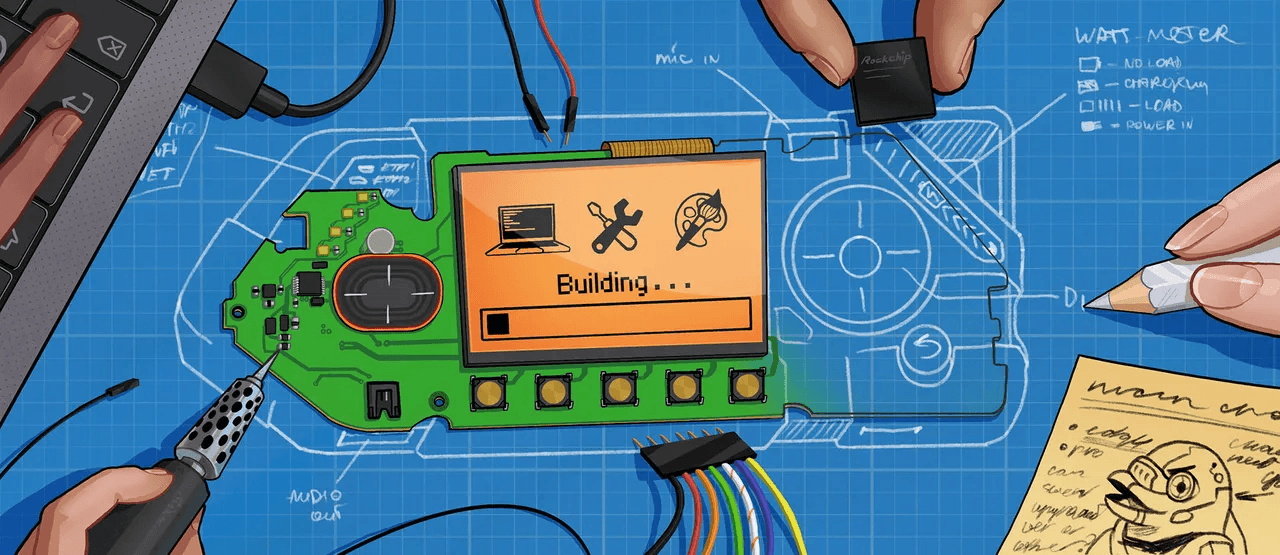
We’re introducing the Flipper One Developer Portal — a public wiki with all development documentation, open to community editing. Active sub-projects include:
- 🔌 Hardware — PCBs, antennas, electrical connections
- ⚙️ Mechanics — enclosure, buttons, plastic/metal parts
- 🐧 Linux (CPU Software) — RK3576 kernel, drivers, bootloader
- 🕹️ MCU Firmware — RP2350 firmware for display, power, buttons
- 🎨 User Interface — UI/UX, visual language, graphics
- 📚 Docs — developer portal wiki, guides, datasheets
- 🧪 Testing — hardware validation, test scripts
Co-processor Architecture
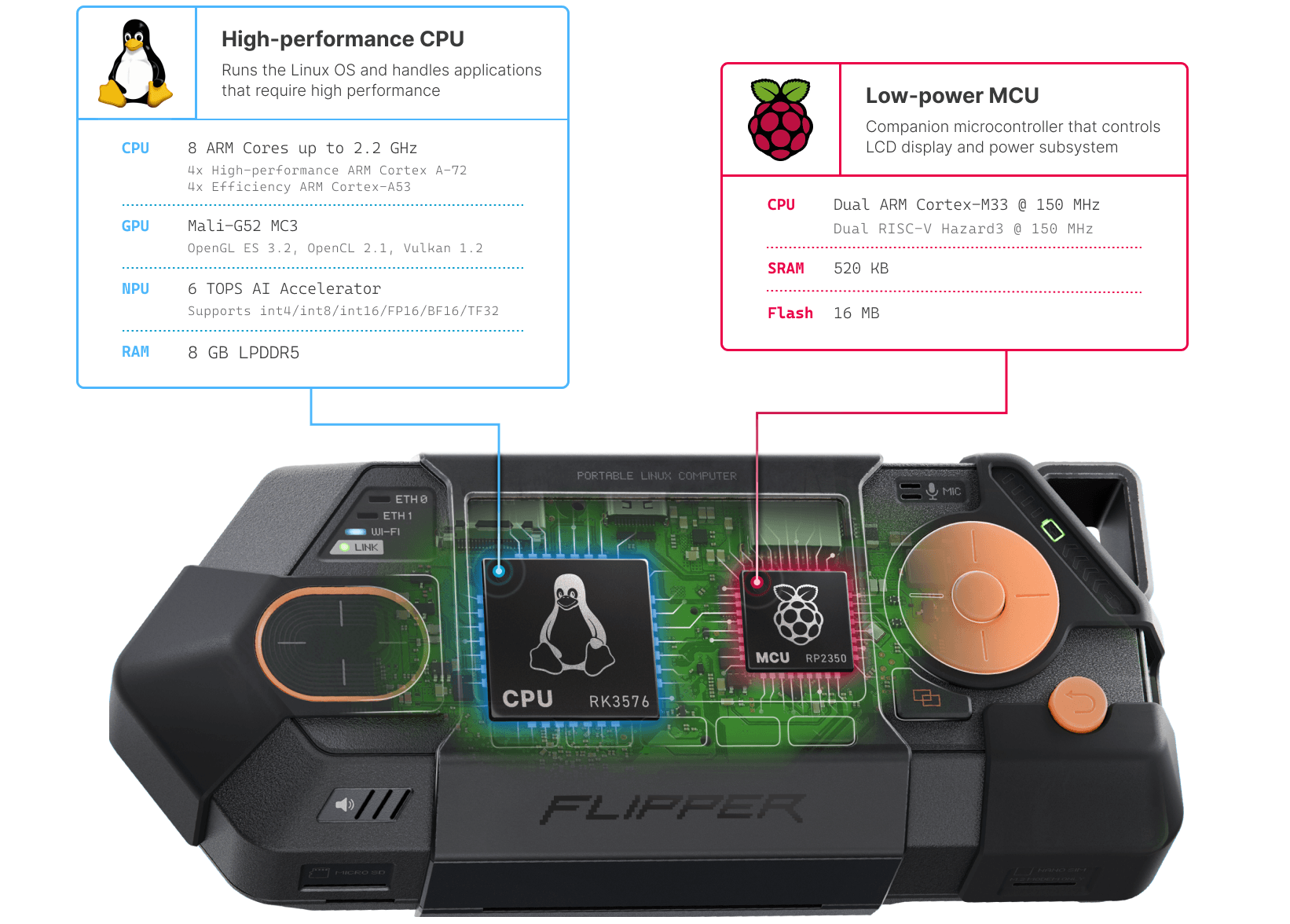
Flipper One runs on two processors:
- High-performance CPU — 8-core Rockchip RK3576 SoC running Linux, with Mali-G52 GPU and NPU for local LLMs. 8 GB RAM on board.
- Low-power MCU — 2-core Raspberry Pi RP2350, controls display, buttons, touchpad, LEDs, and power management. Has its own firmware.
The device can run on the MCU alone — even when Linux is off, you can control Flipper One with buttons and LCD screen. The two processors communicate over an Interconnect (SPI framebuffer, I²C for commands/events, UART + GPIO for boot control).
Flipper OS + FlipCTL
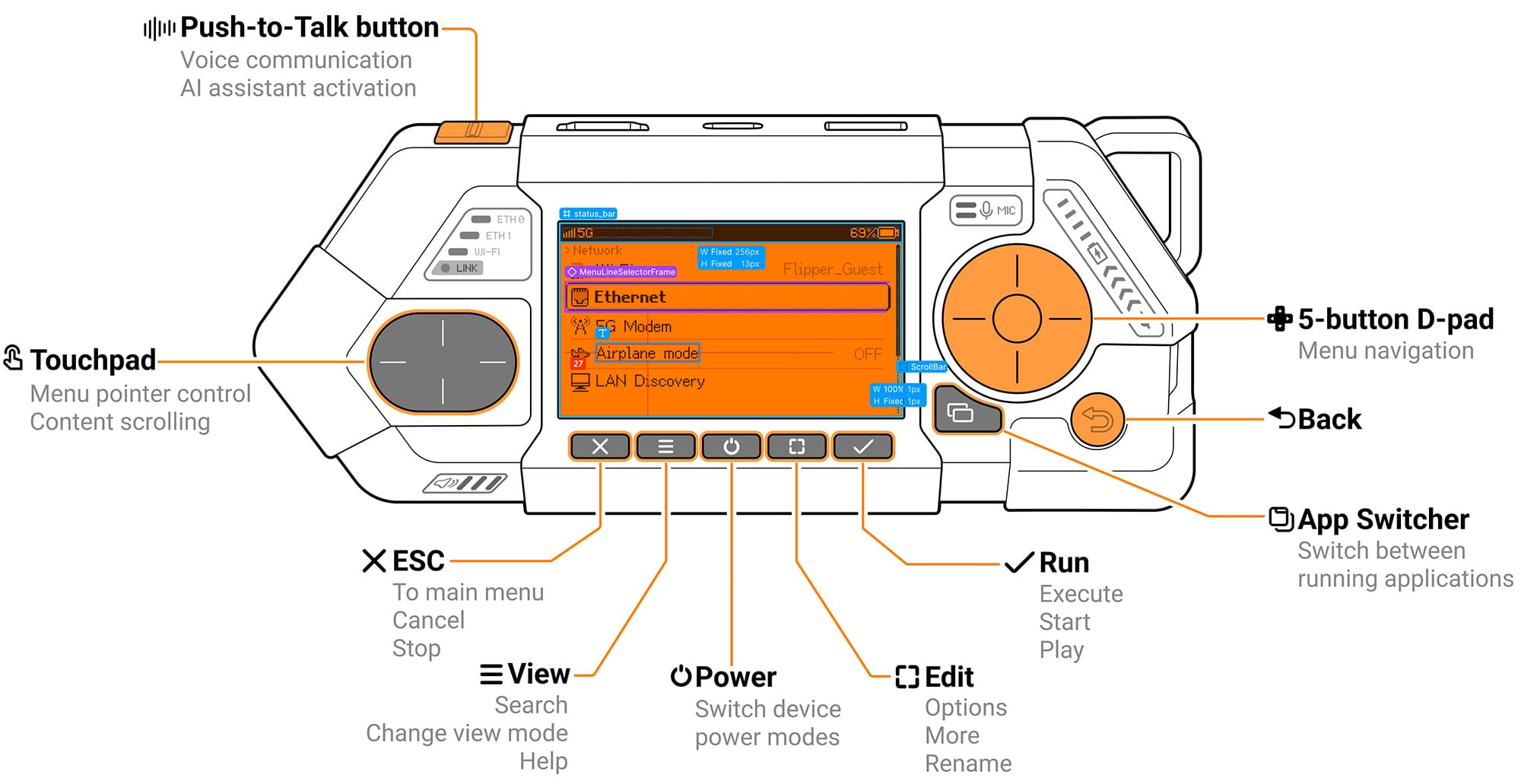
Flipper OS is a layer on top of Debian that introduces profiles: full OS snapshots with different preconfigured packages and settings. Boot a profile, clone it, break it, and jump back to a clean copy — or switch to a totally different profile for a different use case. No more SD card shuffling.
FlipCTL is a framework for menu-based UIs for small LCD screens, controlled by a D-pad and buttons. It wraps existing Linux utilities (ping, nmap, traceroute, etc.) into clean, navigable interfaces optimized for tiny screens. Long-term goal: apt install flipctl to get an HMI on any embedded Linux device.
M.2 Expansion Modules
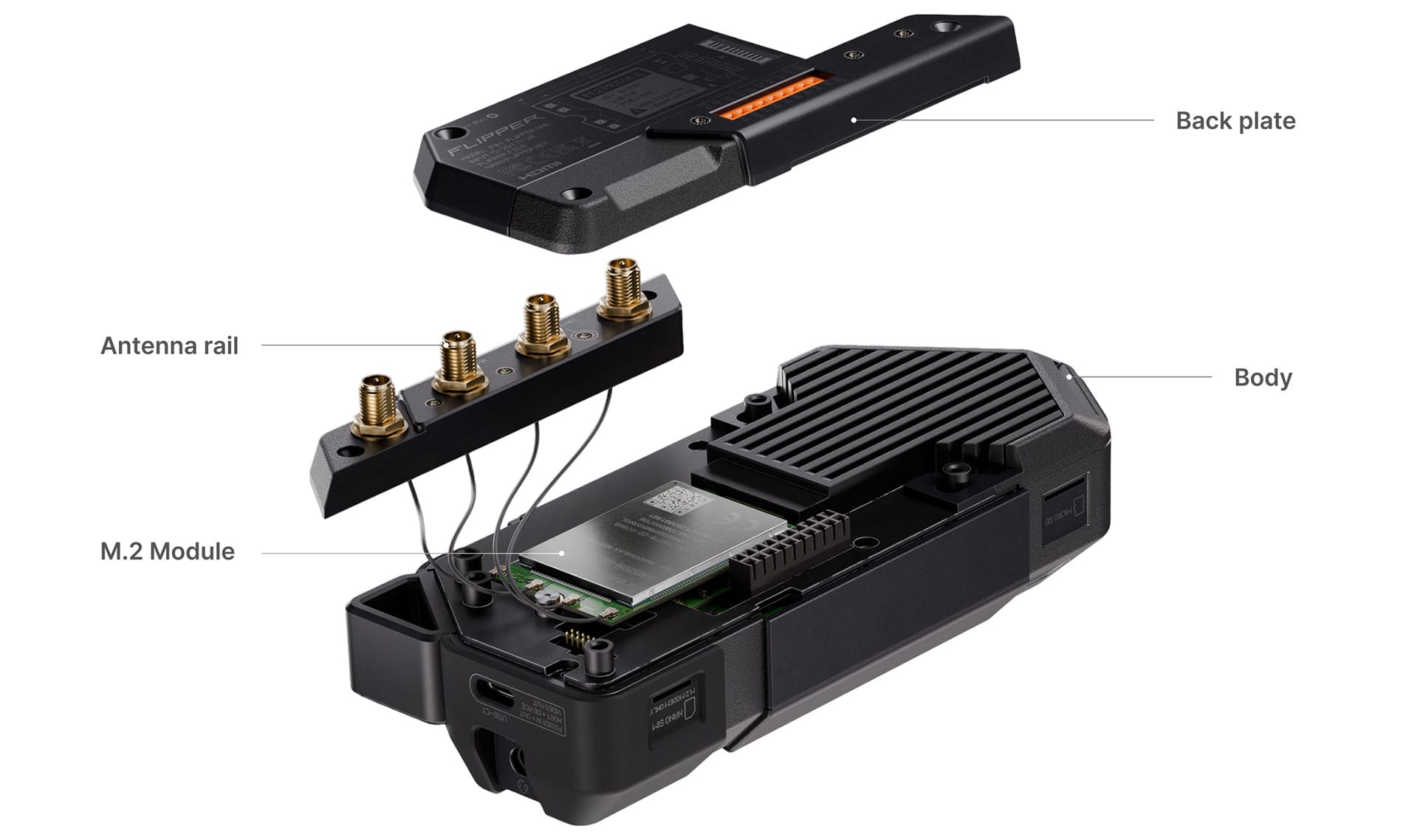
Flipper One supports internal M.2 expansion modules installed under the back plate:
- Type: Key-B
- Sizes: 2242, 3042, 3052 (up to D3 class thickness)
- Interfaces: PCIe 2.1 ×1 / USB 3.1 / USB 2.0 / SATA3 / Serial Audio / UART / I2C / SIM card
Supported module types: cellular/satellite modems, SDR, AI accelerators, NVMe/SATA SSDs, Wi-Fi cards.
Network Multi-tool
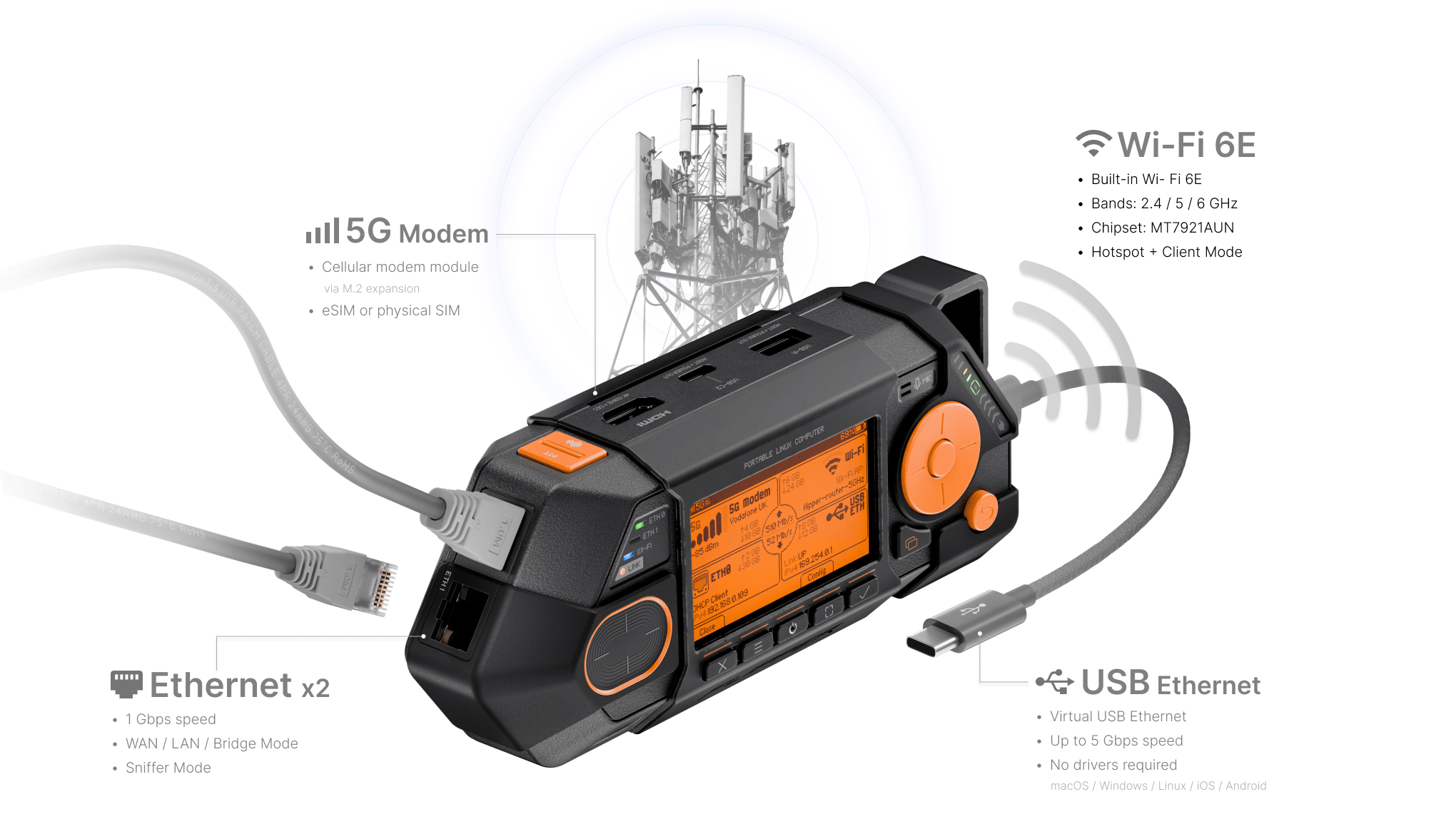
Five independent network uplinks:
- 2× Gigabit Ethernet — transparent bridge, MitM sniffing, and more
- Wi-Fi 6E — MT7921AUN chipset, monitor mode, 2.4/5/6 GHz, STA + AP modes
- Cellular modem — 5G/LTE via M.2 module, Nano SIM + eSIM
- USB Ethernet — up to 5 Gbps over USB-C (USB-CDC NCM, no drivers needed)
Advanced Built-in Wi-Fi
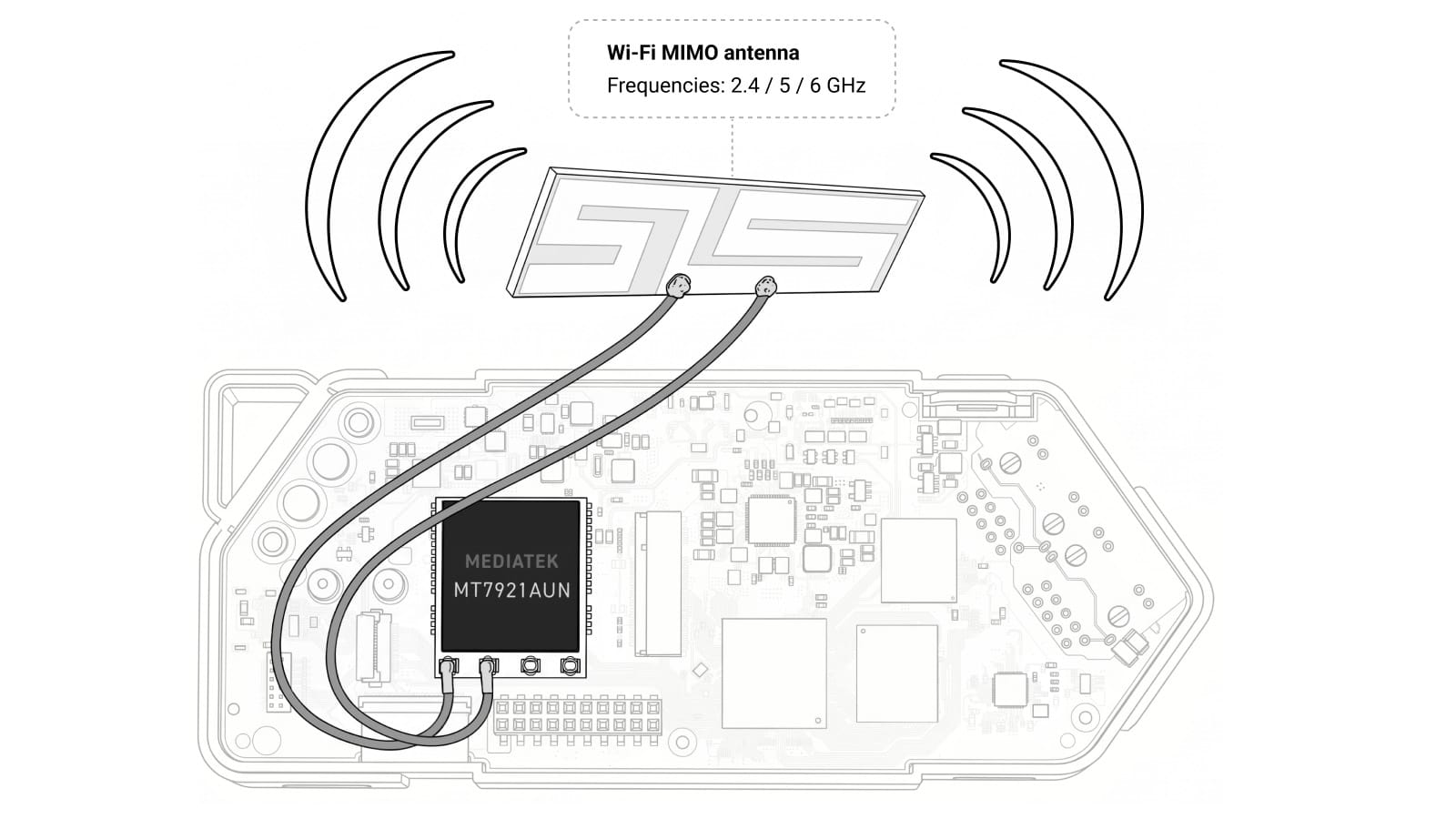
MediaTek MT7921AUN chipset (same as Alfa AWUS036AXML). Supports monitor mode, packet injection, all three frequency bands (2.4/5/6 GHz), and uses a fully open-source mainline kernel driver.
Satellite NTN Connectivity
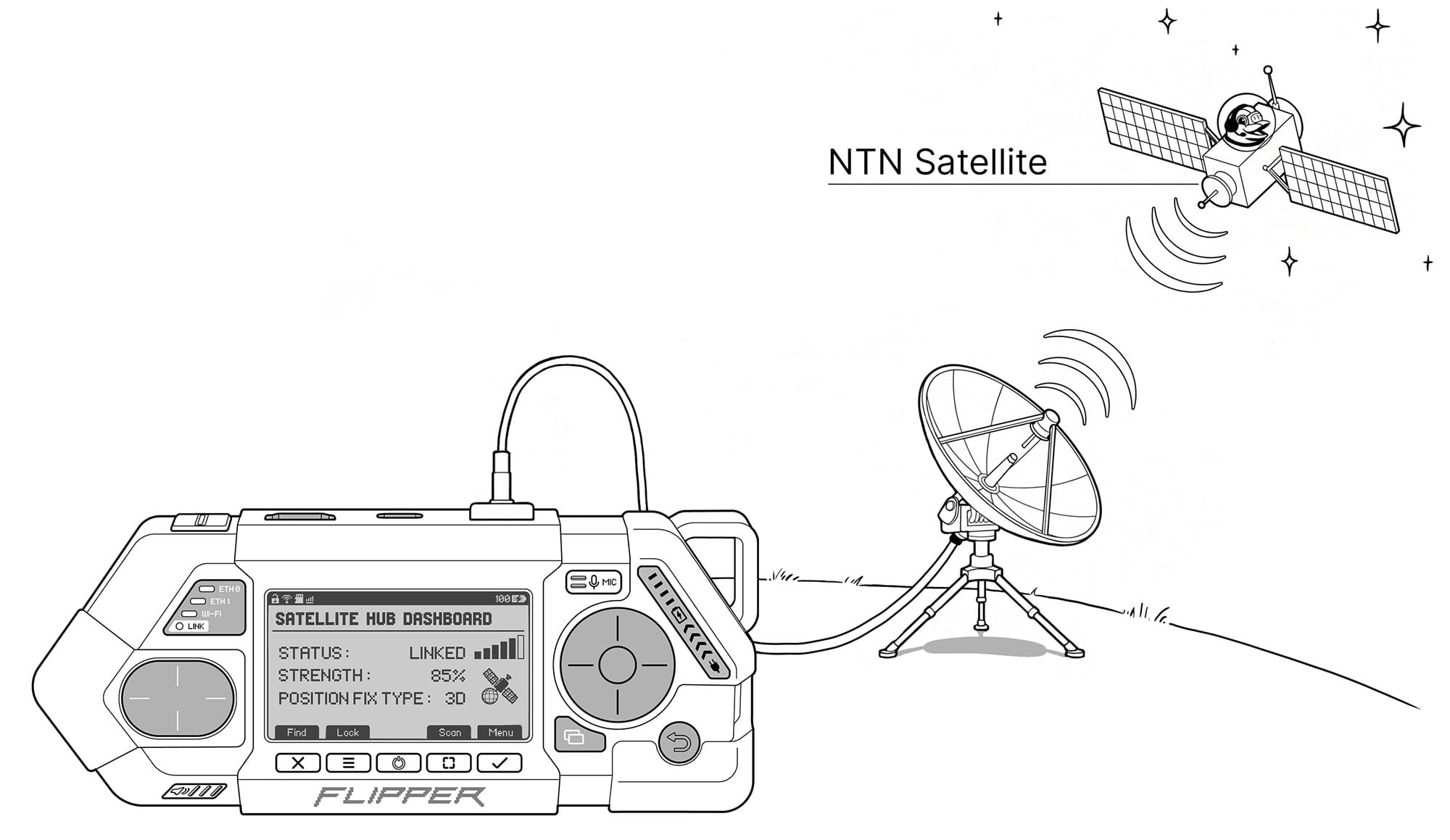
Flipper One supports NTN (Non-Terrestrial Networks) — low-speed IoT satellite connectivity standardized by 3GPP (the same tech used for emergency SOS in newer smartphones). The team is looking for a partner (e.g., Skylo) to support their satellite network on Flipper One’s eSIM module.
Offline Local AI
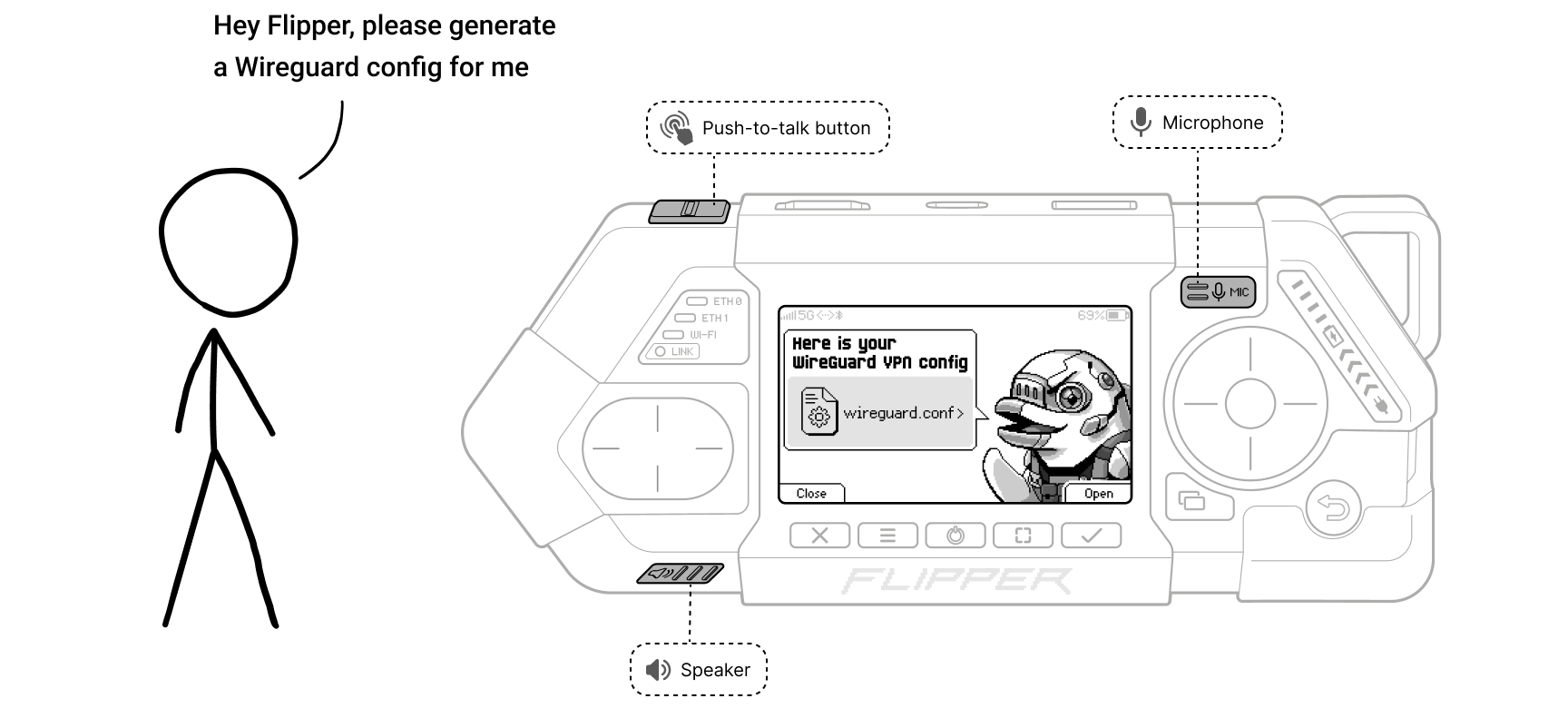
Thanks to the built-in NPU on the RK3576 SoC, Flipper One can run LLMs locally without any internet connection. A specialized model trained on Flipper One internals is planned. NPU mainline kernel support is still in progress — this is one of the open tasks the community can help with.
Survival Desktop & TV Box
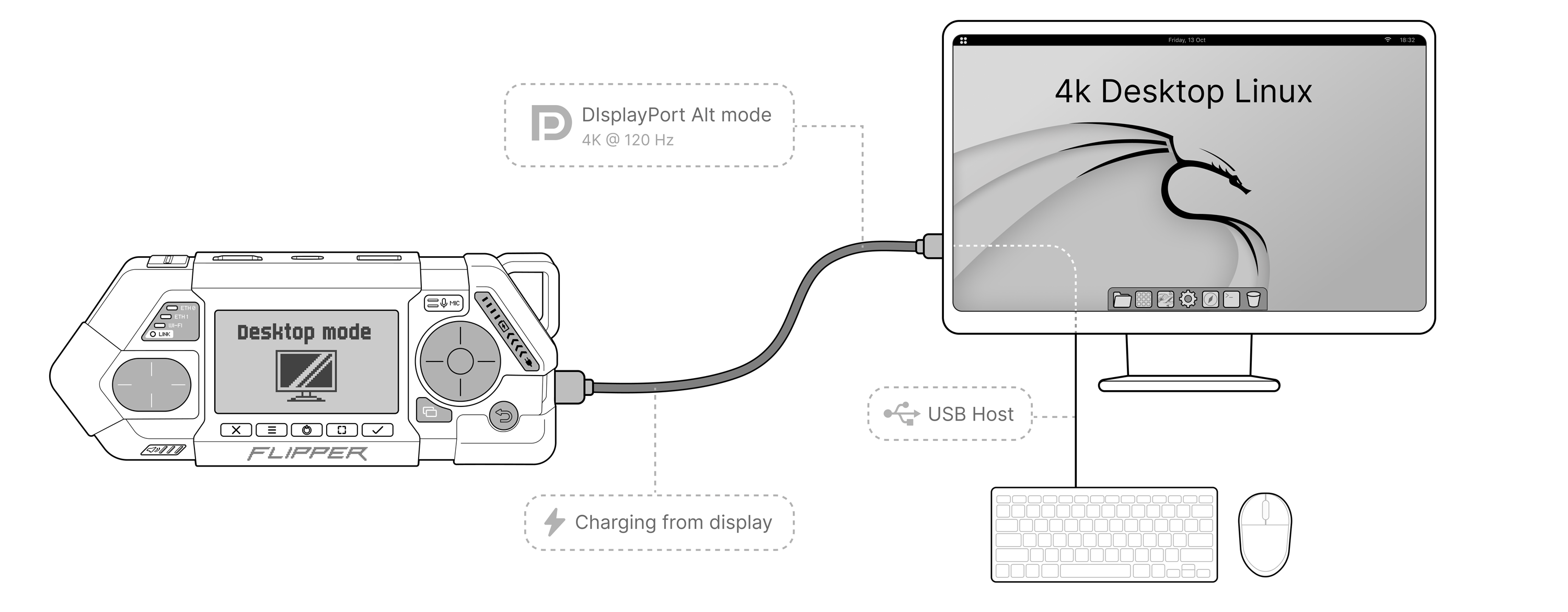
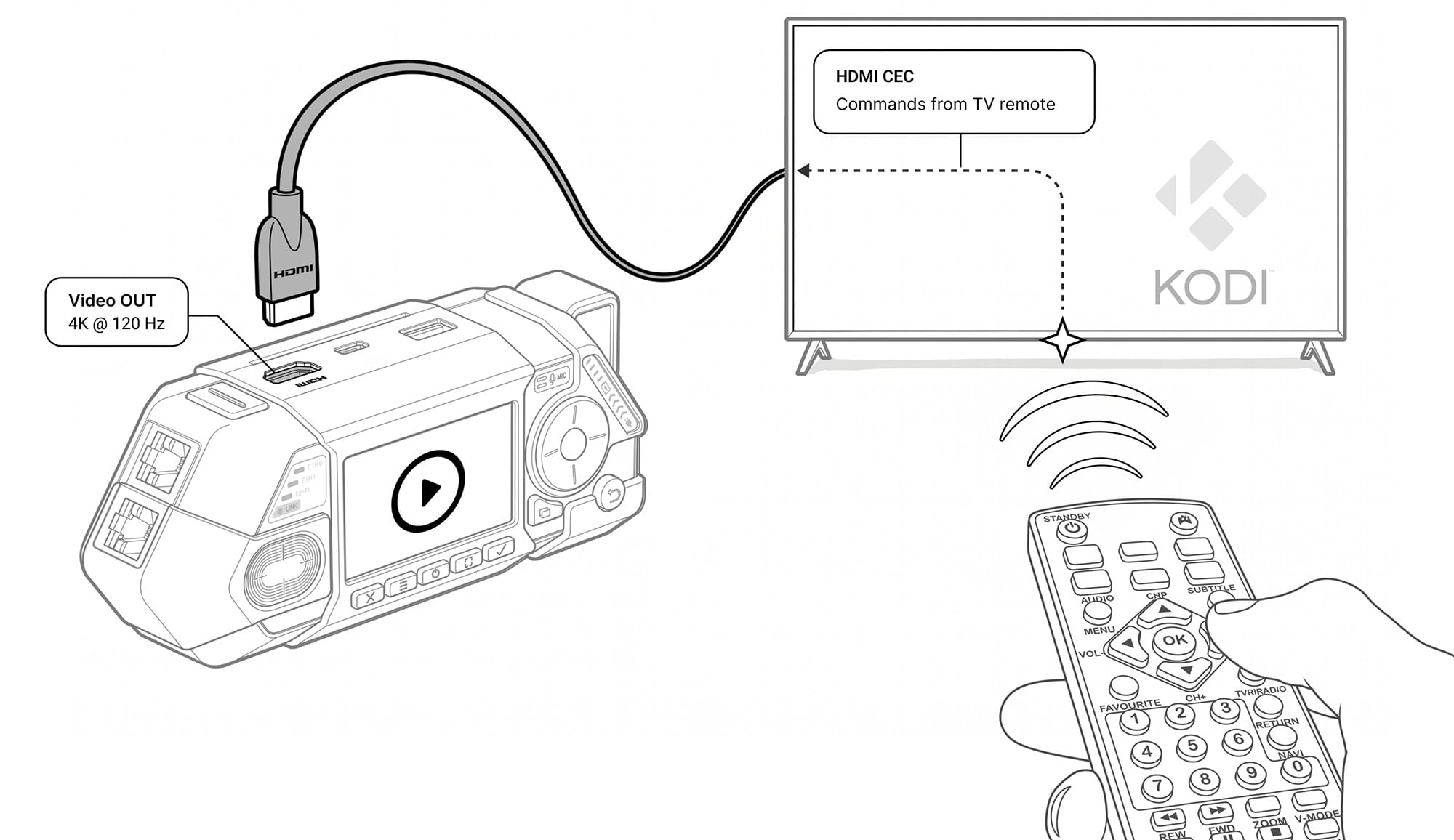
Plug Flipper One into a monitor via a single USB-C cable (DisplayPort Alt Mode) for a full desktop experience — performance comparable to Raspberry Pi 5. Or connect it to your TV: Flipper One has a full-size HDMI 2.1 port supporting 4K @ 120Hz and HDMI CEC, so you can control it with your TV’s own remote.
A Message from the Team
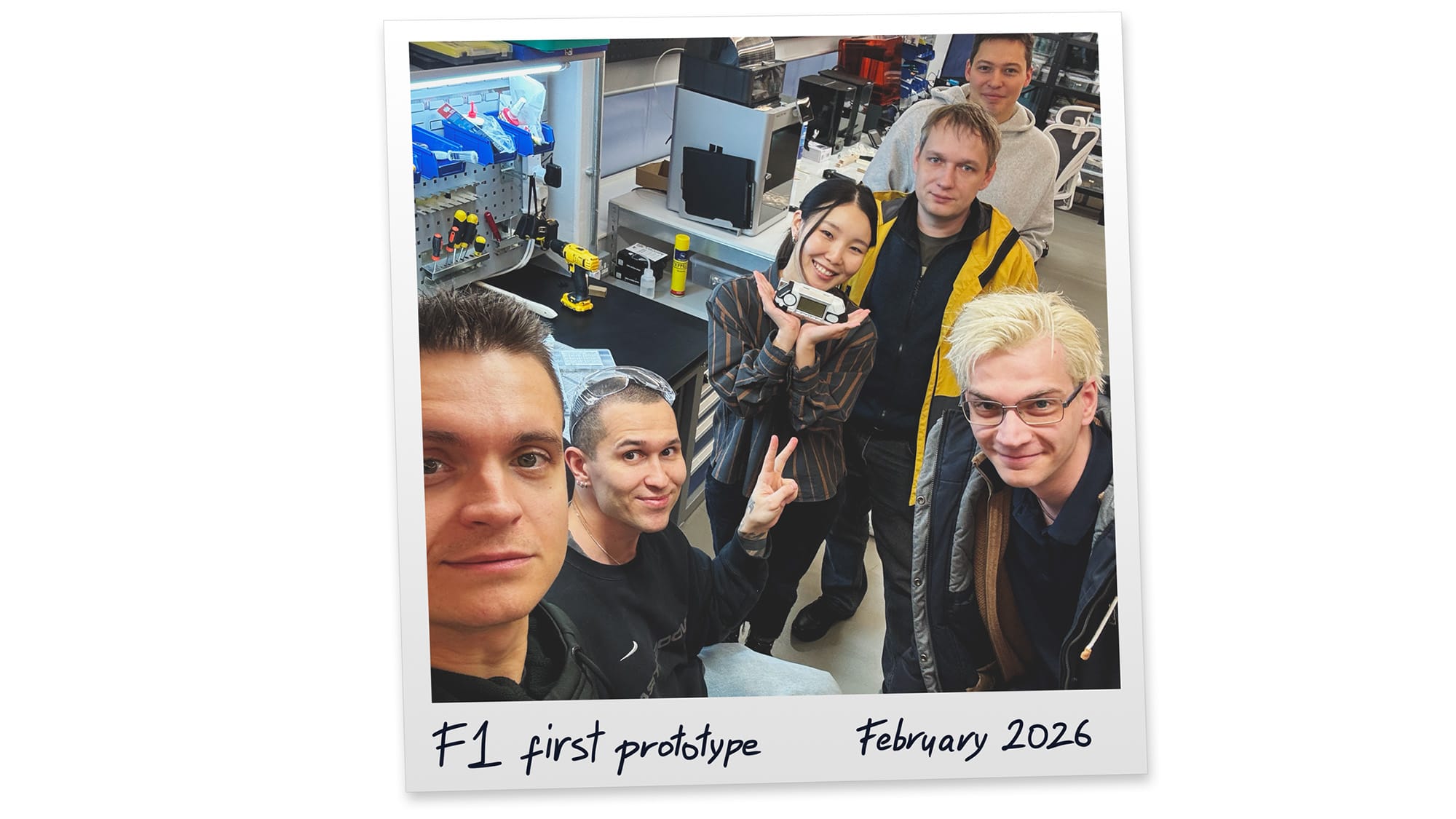
“Flipper One is a deeply personal project. I’ve been thinking about the concept of a pocket Linux multi-tool for the last 10 years… There’s a lot of uncertainty in this project, along with technical challenges and financial risks. I don’t know if we’ll be able to do everything we’ve planned, but we’ll give it everything we’ve got.”
— Pavel Zhovner & Flipper Devices team
If you’re a developer, engineer, or just someone who cares about open hardware and open software, head over to the Flipper One Developer Portal — browse sub-projects, pick up a help wanted task, and build something with us.
Source: Flipper Blog — Flipper One: we need your help
Our Take at MTools Tec: What Flipper One Means for the Hardware Security Community
We’ve been selling and supporting Flipper Zero — and the broader ecosystem of security research tools — for years. When Flipper One was announced, we spent a lot of time thinking about what it actually means for the community we serve. Here’s our honest take.
This Is a Generational Leap, Not Just an Upgrade
Flipper Zero was a gateway drug. It introduced tens of thousands of people to RF, NFC, RFID, and infrared research in a way that felt approachable and fun. But its STM32WB55 MCU always had a ceiling — you were running bare-metal C, not a full OS. Flipper One blows that ceiling off entirely. A quad-core ARM Cortex-A55 running Linux means Flipper One isn’t a toy anymore. It’s a real field computer that happens to fit in your pocket. That changes the calculus for professionals.
Wi-Fi 6E Is the Feature We’ve Been Waiting For
The single biggest limitation of Flipper Zero was always the lack of native Wi-Fi. The Wi-Fi Developer Board helped, but it was always an afterthought bolted onto the GPIO. Flipper One’s onboard MediaTek MT7921AUN chipset — with full monitor mode and packet injection support across 2.4 / 5 / 6 GHz — means this is a first-class wireless auditing device out of the box. For anyone doing wireless penetration testing or IoT security research, this is a very big deal.
The LoRa + Satellite Angle Is Underrated
Most coverage of Flipper One focuses on the Linux core and the Wi-Fi radio. But we think the LoRa module and NTN satellite connectivity are the most underappreciated features. We work closely with the Meshtastic community through our Meshtiny product line, and we see firsthand how much demand there is for off-grid, resilient communication tools. A Flipper One that can bridge Meshtastic mesh networks and connect to satellites for emergency uplink is the kind of device that search-and-rescue teams, field security researchers, and disaster-response engineers have been dreaming about.
What We’re Building Around It
We’re already thinking about how MTools Tec’s product roadmap can complement Flipper One rather than compete with it. A few directions we’re actively exploring:
- LoRa + Meshtastic bridge modules — hardware accessories that let Flipper One act as a full Meshtastic node, integrating with our existing Meshtiny ecosystem.
- RF probe and antenna kits — high-gain directional antennas optimized for the Sub-GHz and 2.4/5 GHz bands that Flipper One uses.
- Field power solutions — extended battery packs and solar charging accessories for extended off-grid deployments.
We’ll announce these properly once Flipper One ships and we can test compatibility directly. If you want to be first to know, join our mailing list.
One Honest Concern: Complexity vs. Accessibility
Flipper Zero’s charm was that almost anyone could pick it up and start doing interesting things within an hour. Flipper One is meaningfully more complex — it’s a Linux device with a development ecosystem, and the learning curve will be steeper. We hope the Flipper team (and the broader community) invests as heavily in beginner-friendly documentation and apps as they do in the hardware itself. The best hardware in the world is only as useful as the people who can actually use it.
The Bottom Line
Flipper One represents exactly the kind of open, community-driven hardware that we built MTools Tec to support. We’re excited, we’re watching the developer portal closely, and we’ll be among the first to get units in hand for testing. Watch this space.
— The MTools Tec Team
Our Take at MTools Tec: What Flipper One Means for the Hardware Security Community
We’ve been selling and supporting Flipper Zero — and the broader ecosystem of security research tools — for years. When Flipper One was announced, we spent a lot of time thinking about what it actually means for the community we serve. Here’s our honest take.
This Is a Generational Leap, Not Just an Upgrade
Flipper Zero was a gateway drug. It introduced tens of thousands of people to RF, NFC, RFID, and infrared research in a way that felt approachable and fun. But its STM32WB55 MCU always had a ceiling — you were running bare-metal C, not a full OS. Flipper One blows that ceiling off entirely. A quad-core ARM Cortex-A55 running Linux means Flipper One isn’t a toy anymore. It’s a real field computer that happens to fit in your pocket. That changes the calculus for professionals.
Wi-Fi 6E Is the Feature We’ve Been Waiting For
The single biggest limitation of Flipper Zero was always the lack of native Wi-Fi. The Wi-Fi Developer Board helped, but it was always an afterthought bolted onto the GPIO. Flipper One’s onboard MediaTek MT7921AUN chipset — with full monitor mode and packet injection support across 2.4 / 5 / 6 GHz — means this is a first-class wireless auditing device out of the box. For anyone doing wireless penetration testing or IoT security research, this is a very big deal.
The LoRa + Satellite Angle Is Underrated
Most coverage of Flipper One focuses on the Linux core and the Wi-Fi radio. But we think the LoRa module and NTN satellite connectivity are the most underappreciated features. We work closely with the Meshtastic community through our Meshtiny product line, and we see firsthand how much demand there is for off-grid, resilient communication tools. A Flipper One that can bridge Meshtastic mesh networks and connect to satellites for emergency uplink is the kind of device that search-and-rescue teams, field security researchers, and disaster-response engineers have been dreaming about.
What We’re Building Around It
We’re already thinking about how MTools Tec’s product roadmap can complement Flipper One rather than compete with it. A few directions we’re actively exploring:
- LoRa + Meshtastic bridge modules — hardware accessories that let Flipper One act as a full Meshtastic node, integrating with our existing Meshtiny ecosystem.
- RF probe and antenna kits — high-gain directional antennas optimized for the Sub-GHz and 2.4/5 GHz bands that Flipper One uses.
- Field power solutions — extended battery packs and solar charging accessories for extended off-grid deployments.
We’ll announce these properly once Flipper One ships and we can test compatibility directly. If you want to be first to know, join our mailing list.
One Honest Concern: Complexity vs. Accessibility
Flipper Zero’s charm was that almost anyone could pick it up and start doing interesting things within an hour. Flipper One is meaningfully more complex — it’s a Linux device with a development ecosystem, and the learning curve will be steeper. We hope the Flipper team (and the broader community) invests as heavily in beginner-friendly documentation and apps as they do in the hardware itself. The best hardware in the world is only as useful as the people who can actually use it.
The Bottom Line
Flipper One represents exactly the kind of open, community-driven hardware that we built MTools Tec to support. We’re excited, we’re watching the developer portal closely, and we’ll be among the first to get units in hand for testing. Watch this space.
— The MTools Tec Team

 Magic Card
 Ultimate Magic Card
 4B UID S70 4K KeyFob
 6-in-1 KeyFob
 NTAG 213 215 216
 NTAG ISO15693
 ISO15693 TAG – 64B
 RFID Reader
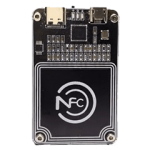 PN532 BLE
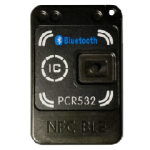 PcrReader(IC+ID)
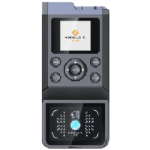 iCopy-XS
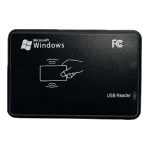 ISO15693 Reader
 NFCKill Pro
 125KHz T5577 Cloner
 RFID Emulator
 RF Detector
 Chameleon Ultra SE
 Chameleon Lite
 Chameleon Mini 2022
 Pixl Amiibo
 Lora
Lora Meshtiny

 WiFi Deauthor
 WiFi Killer Pro
 USB Hack
 Plugin

 YMM Car Bulb Size
 OpenAI Reviewer
 Code
Code MTools Activation Code
 View All