



 Home
Home Reader













 Flipper

 Cardputer


 Software
 Windows
 PCSC Mifare Program
 Chameleon Ultra GUI
 iOS
iOS Android
 Web
WebMeshtastic, Tips
GAT562 30s TX Power Settings & Actual Output Power at 869 MHz — Complete Reference
Apr
One of the most common questions we receive about the GAT562 30s series is: “What’s the actual RF output power at different TX Power settings?” This guide provides a complete, measured reference table for the 869 MHz band so you can fine-tune your node for optimal range, battery life, and regulatory compliance.
Applicable Products
This TX Power data applies to the following GAT562 30s products operating on the EU868 frequency band:
- GAT562 30s Kit – 30dBm Mesh Device with Filter — The full-featured off-grid tracker with GPS, BME280, 1.3″ TFT display, buzzer, RGB LEDs, and joystick. Ideal for handheld or mobile mesh operations.
- GAT562 30s Mesh Solar Repeater – 30dBm — A compact, solar-powered repeater board designed for permanent outdoor deployment. Perfect for building long-range mesh backbone infrastructure.
Both products share the same nRF52840 + SX1262 + PA (Power Amplifier) radio architecture, so their TX Power behavior at 869 MHz is identical.
TX Power Settings vs. Actual Output Power at 869 MHz
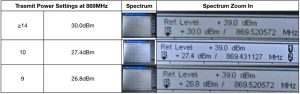
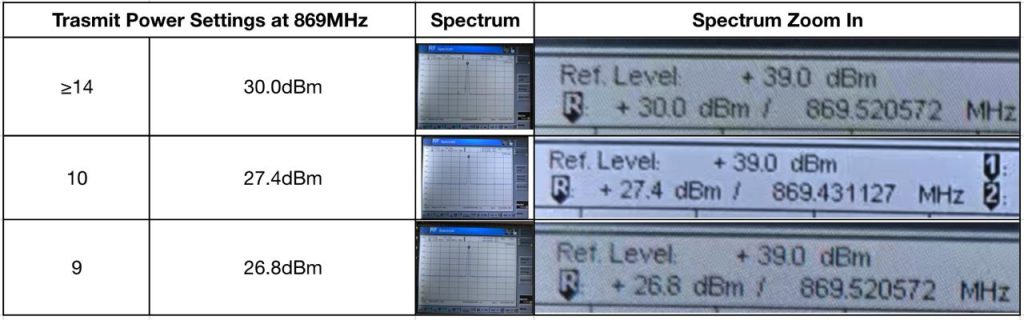
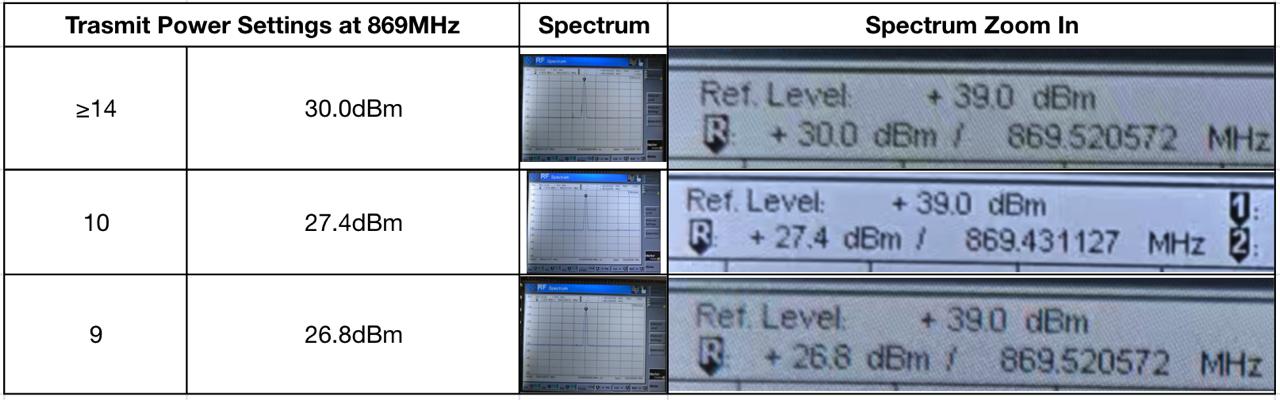
The table below shows the measured actual RF output power for each TX Power setting value in the Meshtastic firmware when operating at 869 MHz. These are real-world measurements, not theoretical values.
| TX Power Setting | Actual Output (dBm) | Actual Output (mW) | Notes |
|---|---|---|---|
| 22 | 30.0 | 1000 | 🔴 Maximum output — PA saturated at 1W |
| 21 | 30.0 | 1000 | |
| 20 | 30.0 | 1000 | |
| 19 | 30.0 | 1000 | |
| 18 | 30.0 | 1000 | |
| 17 | 30.0 | 1000 | |
| 16 | 30.0 | 1000 | |
| 15 | 30.0 | 1000 | |
| 14 | 29.8 | 955 | Near max — minimal drop |
| 13 | 29.4 | 871 | |
| 12 | 28.8 | 759 | |
| 11 | 28.2 | 661 | |
| 10 | 27.4 | 550 | |
| 9 | 26.8 | 479 | |
| 8 | 25.8 | 380 | |
| 7 | 24.8 | 302 | |
| 6 | 23.8 | 240 | |
| 5 | 22.6 | 182 | |
| 4 | 21.4 | 138 | |
| 3 | 20.0 | 100 | 🟢 100 mW — common EU ERP limit |
| 2 | 18.4 | 69 | |
| 1 | 16.2 | 42 | |
| 0 | 13.6 | 23 | Minimum output |
RF Signal Comparison: 30s Kit vs Pro (22dBm)
The waterfall spectrum below provides a vivid real-world comparison. The image shows a GAT562 Pro (22dBm version) sending a single BLE advertisement alongside a GAT562 30s Kit transmitting 3 consecutive messages. The difference in signal intensity is immediately visible — the 30s Kit’s 30 dBm (1W) output produces dramatically brighter, wider signal traces compared to the Pro’s 22 dBm (158 mW) transmission.
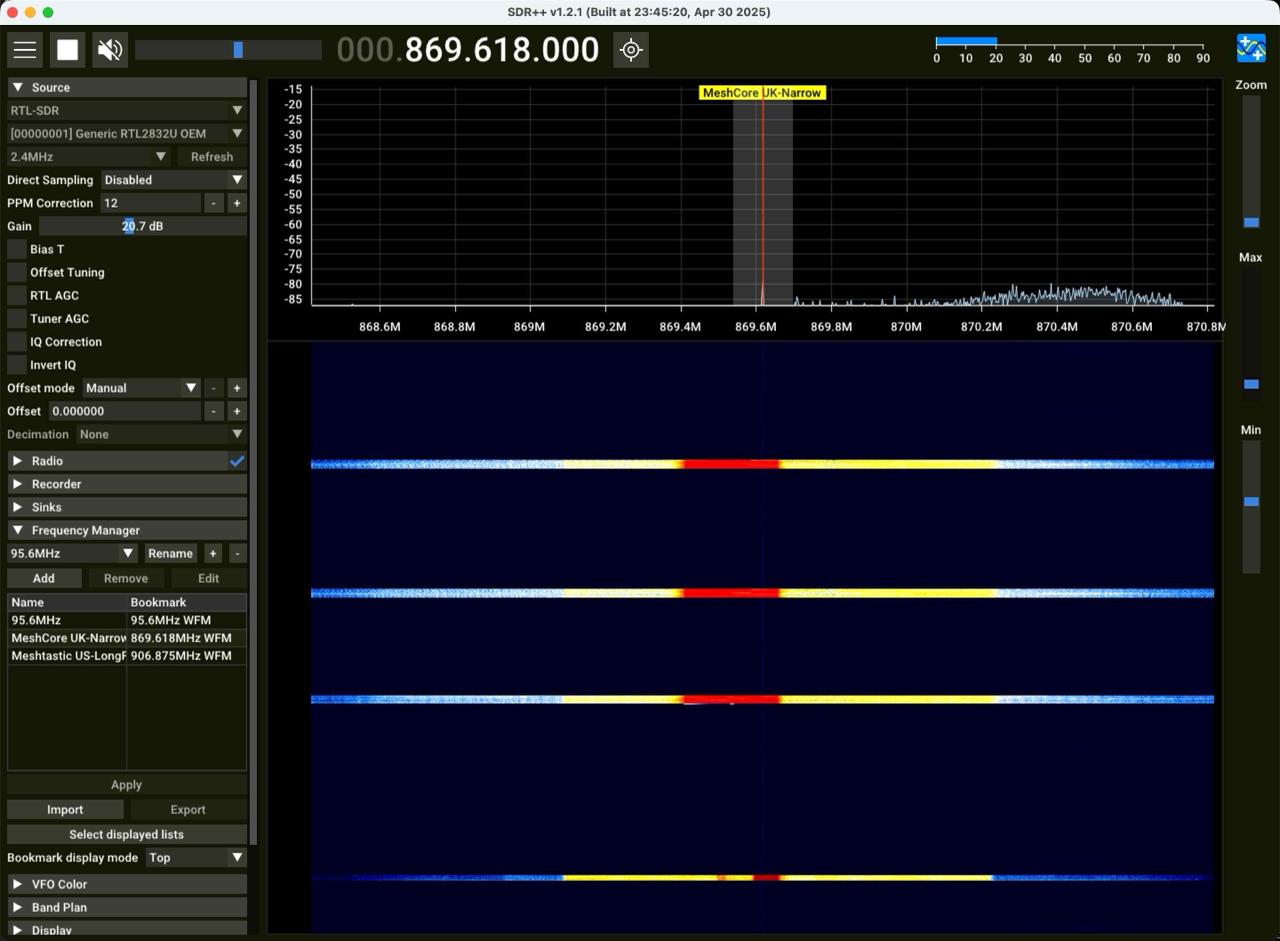
The ~8 dB difference between 22 dBm and 30 dBm translates to roughly 6.3× more power — a difference that is clearly visible in the spectrum analyzer. This extra power is what enables the 30s series to achieve reliable links over 100+ km in favorable terrain conditions.
Key Takeaways
1. Settings 15–22 All Output 30 dBm (1W)
The built-in Power Amplifier (PA) saturates at 30.0 dBm. Any TX Power setting from 15 to 22 will produce the same maximum output of 1 Watt (1000 mW). There is no benefit to setting TX Power above 15 — you’ll get the same RF output while the firmware defaults to 22 as the maximum.
2. Real Power Control Starts at Setting 14
Below setting 15, the actual output begins to drop. At setting 14, the output is 29.8 dBm (~955 mW) — still very close to max. The power then decreases roughly 1–2 dB per step down to setting 0.
3. EU Regulatory Compliance
For EU 868 MHz operations, the standard ERP limit is 25 mW (14 dBm) for the default sub-band, though the 869.4–869.65 MHz sub-band allows up to 500 mW (27 dBm) ERP at ≤10% duty cycle. Always verify your local regulations before deploying at higher power levels.
If you need to comply with the 25 mW limit, a TX Power setting of 0–1 would keep you within range (13.6–16.2 dBm output, minus antenna gain). For the 500 mW sub-band, settings around 9–10 (26.8–27.4 dBm) provide a good balance.
4. Battery Life Optimization
Running at full 1W power draws significantly more current than lower settings. For battery-powered deployments like the 30s Kit, consider reducing TX Power to setting 10–12 (27.4–28.8 dBm) for a good compromise between range and battery life. You’re only giving up 2–3 dB while potentially doubling your battery runtime.
For the Solar Repeater with continuous solar charging, running at full power (setting 15+) is generally sustainable during daylight hours.
5. Total Dynamic Range: 16.4 dB
From the minimum output at setting 0 (13.6 dBm / 23 mW) to the maximum at setting 15+ (30.0 dBm / 1000 mW), the GAT562 30s provides a 16.4 dB dynamic range — that’s a 44× difference in power output, giving you excellent flexibility for different deployment scenarios.
Important Notes
- Frequency-dependent: These measurements are specific to 869 MHz. Output power may vary slightly at different frequencies (e.g., 915 MHz for US band) due to PA characteristics and filter response.
- Filter version: Both the 30s Kit and Solar Repeater now ship with a built-in SAW filter. Please select the correct frequency variant (EU868 or US915) when ordering — the filter is frequency-specific.
- USB power limitation: When transmitting at 30 dBm via USB power only (without battery), the USB port may not supply sufficient current for stable 1W output. Always connect a battery when operating at high TX Power settings.
- Antenna matters: To fully utilize the 30 dBm output, use a properly matched antenna. We recommend our 868 MHz 20cm Whip Antenna for optimal performance on the EU band.
Related Products
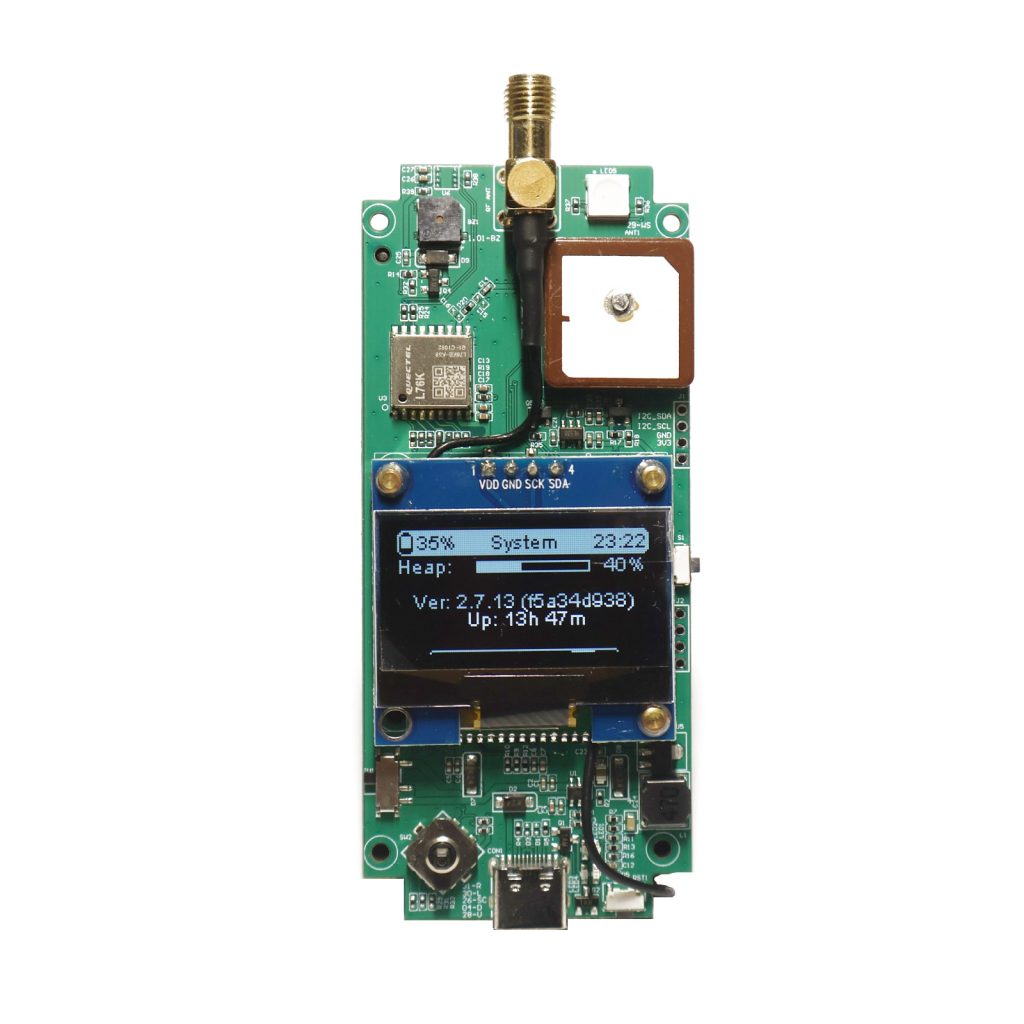
GAT562 30s Kit – 30dBm Mesh Device with Filter
The nRF52840 Off-Grid tracker with Buzzer, RGB LEDs, GPS and BME280 Pad. 30dBm 1W Power.
New version comes with Filter, please choose the frequency accordingly.
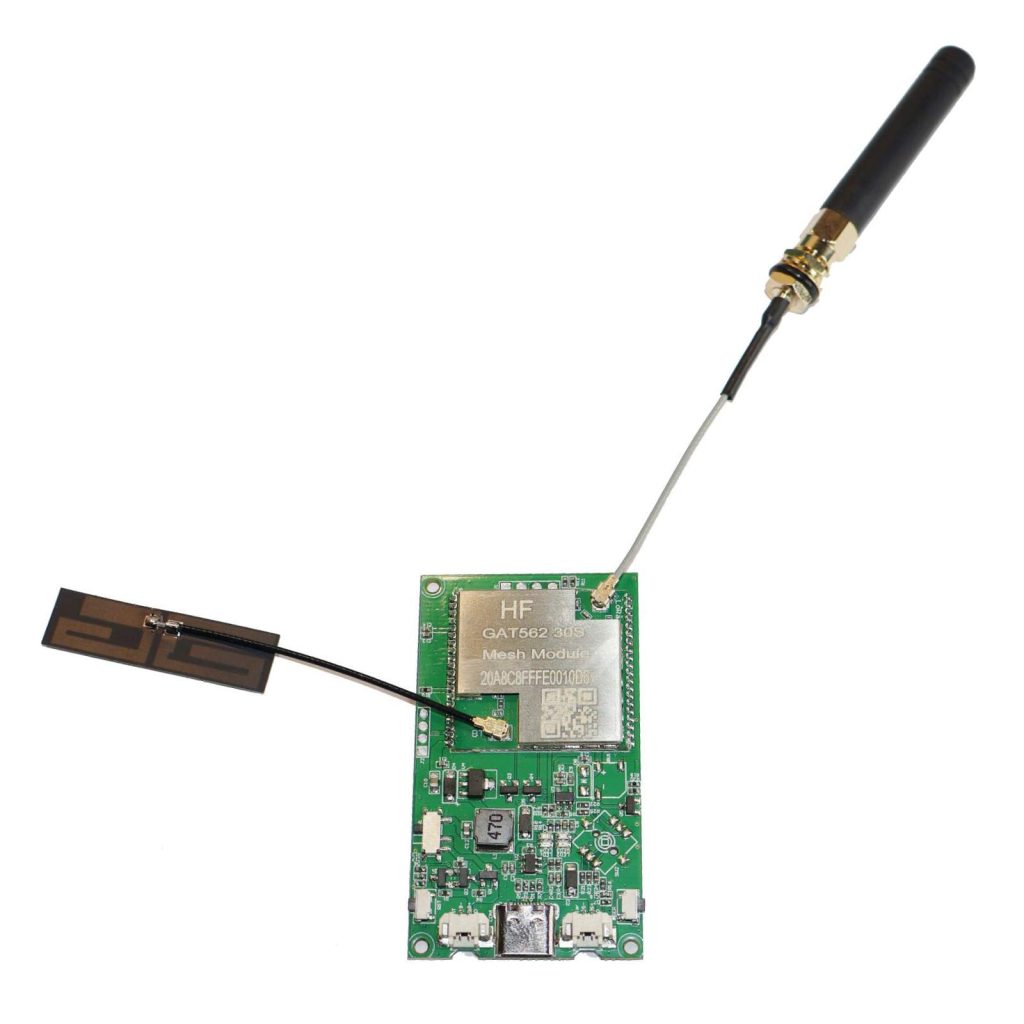
GAT562 30s Mesh Pod Solar Repeater – 30dBm
GAT562 30s Mesh Solar Repeater – 30dBm: A high-power 30dBm output for robust, long-range wireless coverage in outdoor and off-grid areas.
New version comes with Filter, please choose the frequency accordingly.

 Magic Card
 Ultimate Magic Card
 4B UID S70 4K KeyFob
 6-in-1 KeyFob
 NTAG 213 215 216
 ISO15693 TAG – 64B
 Gen2 ISO15693 Coin
 RFID Reader
 PN532 BLE
 PcrReader(IC+ID)
 PN532Killer
 GroveNFC
 Proxmark3 RDV4
 iCopy-XS
 UHF Reader
 NFCKill Pro
 125KHz T5577 Cloner
 RFID Emulator
 Chameleon Ultra SE
 Chameleon Mini 2022
 Pixl.js OLED
 RFID Detector (LF HF UHF)
 RF Detector (LF HF)
 Lora
Lora Meshtiny
 GAT562 Pro
 GAT562 30s Kit
 Wio Tracker L1P
 WiFi Deauthor
 WiFi Killer Pro
 Plugin
 店小秘 PayPal 物流同步
 Product Category Banner
 YMM Car Bulb Size
 Attributes Separator
 OpenAI Reviewer
 Code
Code MTools Activation Code
 View All